
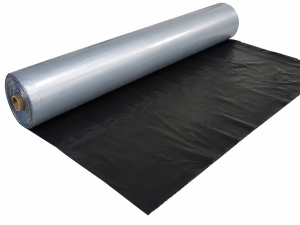
20 Micron Center Hole Mulching Sheet – 3.2 Feet | 3 Months for Efficient Crop Cultivation
The 20 Micron Center Hole Mulching Sheet – 3.2 Feet | 3 Months is an agricultural soil-covering solution developed to make crop-bed management more convenient and organized. Also commonly described as Mulching Paper or Crop Cover, this product is designed to cover the soil around cultivated plants while allowing crops to grow through the designated center holes.
The center-hole design provides an important practical advantage during planting. Instead of manually determining and cutting every planting opening in the field, farmers can use the existing holes as a guide for positioning plants. This can help maintain more consistent spacing and make the installation process easier when the sheet and crop spacing are appropriately matched.
The 20-micron construction provides a lightweight and practical option for seasonal agricultural applications. With proper installation and suitable field conditions, the product is intended for approximately 3 months of use. Actual service life can vary depending on sunlight exposure, weather, wind, irrigation practices, field conditions, installation quality, and handling.
The sheet acts as a physical barrier over exposed soil. By limiting sunlight reaching the covered soil surface, it can help suppress the growth of many unwanted weeds. Reduced weed growth can help minimize competition between weeds and crops for available water, nutrients, space, and sunlight.
The Mulching Sheet can also support soil moisture management by reducing direct exposure of the soil surface to sunlight and air. When used together with suitable irrigation practices, particularly drip irrigation, it can help farmers manage water around the crop root zone more effectively.
Where It Is Used
The 20 Micron Center Hole Mulching Sheet – 3.2 Feet can be used in a variety of agricultural and horticultural applications where the crop spacing is compatible with the center-hole arrangement.
Typical applications include:
- Vegetable cultivation
- Commercial vegetable farming
- Raised-bed farming
- Open-field agriculture
- Horticultural cultivation
- Nursery and seedling production
- Kitchen and market gardens
- Seasonal crop cultivation
- Row-based farming
- Small and medium-scale farms
- Commercial agricultural projects
It may be suitable for crops such as tomato, chilli, brinjal, capsicum, cucumber, strawberry, okra, gourds, and other compatible vegetable and horticultural crops.
Farmers should always consider the crop variety, planting distance, soil type, irrigation method, and bed dimensions before selecting the sheet.
The 3.2-foot width can be particularly useful for crop beds where a relatively narrow Mulching Paper is appropriate. Proper bed preparation and accurate alignment of the center holes are important for obtaining the best practical results.
Whom It Is Used By
This Crop Cover can be useful for a wide range of agricultural users, including:
- Vegetable farmers
- Horticultural farmers
- Commercial crop growers
- Nursery operators
- Agricultural entrepreneurs
- Small and medium-scale farmers
- Contract farming operations
- Kitchen garden growers
- Market garden operators
- Farm project managers
For commercial farmers, the center-hole design can help simplify planting operations and establish a more organized crop layout. When combined with appropriate bed preparation, irrigation, fertilization, and crop-management practices, the Mulching Sheet can become part of an integrated cultivation system.
Advantages of the Product
1. Convenient Center-Hole Design
The pre-formed center holes make planting more convenient and provide a visible guide for crop positioning. This can reduce the need to manually create planting openings across the entire sheet.
2. Helps Suppress Weeds
The covered soil receives less direct sunlight, which can help reduce the germination and growth of many weeds in the covered areas. This may reduce the frequency of manual weeding.
3. Supports Soil Moisture Conservation
Covering exposed soil can reduce direct evaporation from the soil surface. This can support more efficient moisture management when the crop receives appropriate irrigation.
4. Helps Maintain Consistent Crop Spacing
The center holes can help farmers establish a more uniform planting pattern when the hole spacing is appropriate for the selected crop.
5. Reduces Routine Weeding Work
By physically covering much of the soil surface, the Crop Cover can reduce weed growth in the spaces between plants, potentially reducing labour requirements for manual weeding.
6. Supports Cleaner Crop Beds
The Mulching Paper creates a defined boundary around crop plants and can help keep the growing area more organized and manageable.
7. Suitable for Vegetable Cultivation
The product can be considered for several vegetable and horticultural crops where the crop spacing corresponds with the sheet's hole arrangement.
8. Works with Modern Irrigation Practices
The Mulching Sheet can be used alongside drip irrigation when installed correctly. The irrigation system should be positioned so water reaches the crop root zone effectively.
9. Useful for Seasonal Farming
With an intended use period of approximately three months under suitable conditions, the product can be appropriate for certain short-duration and seasonal crops.
10. Practical for Commercial Agriculture
For commercial vegetable farms, a properly installed Mulching Sheet can support organized planting, weed management, moisture management, and routine crop maintenance.
Installation and Maintenance
Before laying the 20 Micron Center Hole Mulching Sheet, farmers should prepare the field or raised bed properly. Remove stones, sharp objects, large roots, and other materials that could puncture or damage the sheet. The bed should be reasonably level to ensure that the Crop Cover sits properly over the soil.
Position the sheet carefully so that the center holes align with the intended crop locations. Secure the edges using soil, suitable fixing pins, or another appropriate agricultural fixing method. Proper anchoring is especially important in areas exposed to strong winds.
If drip irrigation is being used, install and position the irrigation line appropriately before or during Mulching Sheet installation. Ensure that water reaches the crop root zone rather than being blocked by an improperly positioned sheet.
During cultivation, farmers should periodically inspect the sheet for tears, loose edges, displaced sections, or other damage. Avoid dragging sharp tools over the surface. Any loose portions should be secured promptly where practical.
The approximately 3-month usage period is an expected agricultural application period and not a guaranteed lifespan. Actual durability depends on environmental and farm-management conditions, including UV exposure, temperature, rainfall, wind, soil conditions, installation method, and handling.
Proper installation and careful maintenance can help farmers obtain better performance from the Mulching Sheet throughout the crop cycle.