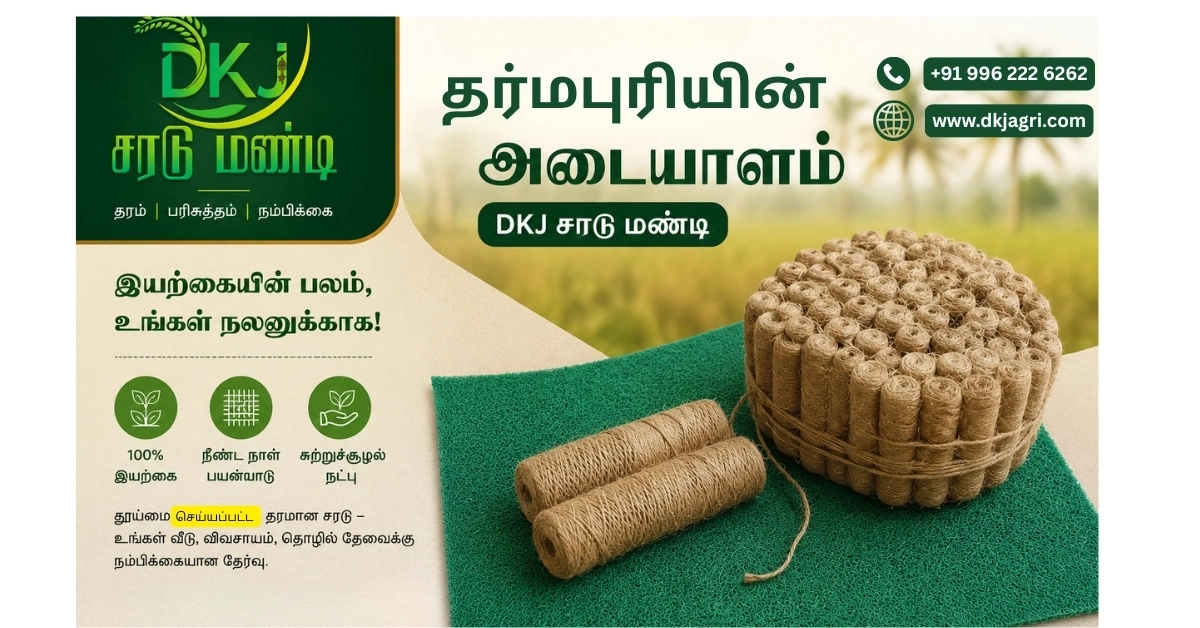
Coco Fiber Small | Piri | Sarapiri for Agriculture

Coco Coir Rope

Coco Fiber Small

SKU: co/s/piri

Contact for Pricing

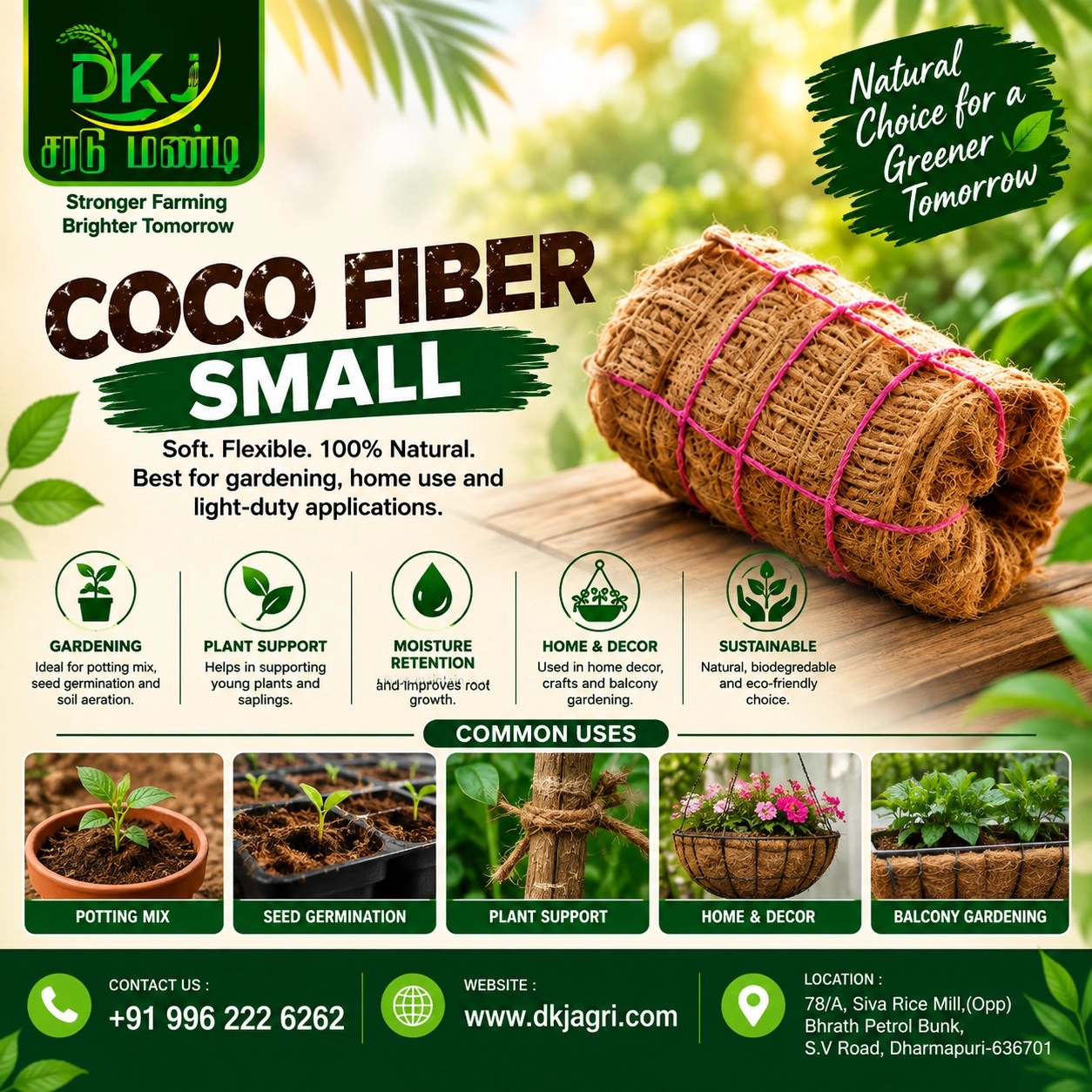
Coco Fiber Small is ideal for supporting vegetable crops like tomatoes, beans, pepper, cucumber, brinjal, chilli, grapes, flowering plants, and nursery saplings. It helps secure plants without damaging stems, promotes healthy growth, and withstands varying weather conditions. Farmers prefer Coco Fiber Small because it is sustainable, easy to handle, long-lasting, and environmentally friendly.Suitable for home gardens, commercial farms, organic farming, horticulture, vineyards, and greenhouse .

Share to Social Media

0 Shares
@
Live Knowledge Feeder

AI LLM Knowledge Feeder

Inject this page's real-time knowledge graph, specifications, and metadata directly into external LLMs for precise contextualized analysis.

Key Specifications

Material: 100% Natural Coconut Fiber
Features: Eco-Friendly, Biodegradable, Strong & Flexible

Coco Fiber Small :

Coco Fiber Small | Piri | Sarapiri for Modern Agriculture
Where is Coco Fiber Small Used?

  • Tomato cultivation
  • Beans farming
  • Chilli cultivation
  • Brinjal farming
  • Capsicum cultivation
  • Cucumber farming
  • Bitter gourd cultivation
  • Bottle gourd farming
  • Ridge gourd cultivation
  • Grapevines
  • Pepper vines
  • Betel leaf cultivation
  • Flower farming
  • Nursery plants
  • Coconut nurseries
  • Banana plantations
  • Polyhouse farming
  • Greenhouse cultivation
  • Organic farming
  • Terrace gardening
  • Home gardening
  • Commercial horticulture
  • Fruit orchards
Whom is it Used For?
  • Farmers
  • Organic farmers
  • Commercial growers
  • Greenhouse owners
  • Polyhouse operators
  • Nursery owners
  • Horticulture professionals
  • Vineyard owners
  • Flower growers
  • Landscape contractors
  • Home gardeners
  • Agricultural institutions
  • Government farming projects
  • Export-oriented farms
Advantages of Coco Fiber Small
  • 100% natural coconut fiber
  • Eco-friendly and biodegradable
  • Strong and flexible
  • Gentle on plant stems
  • Excellent tensile strength
  • Easy to tie and remove
  • Supports healthy plant growth
  • Weather resistant
  • Suitable for organic farming
  • Reduces plastic usage
  • Long-lasting performance
  • Safe for vegetables and fruits
  • Cost-effective agricultural solution
  • Lightweight and easy to transport
  • Suitable for commercial farming
Why Choose Coco Fiber Small?

Coco Fiber Small, popularly known as Piri and Sarapiri, is a natural fiber obtained from premium-quality coconut husks. It is one of the most trusted agricultural tying materials used for supporting plants, tying vines, securing saplings, and managing crops in organic and commercial farming. Being biodegradable and eco-friendly, Coco Fiber Small has become an ideal choice for sustainable agriculture.

Unlike plastic ties, Coco Fiber Small decomposes naturally without harming the environment while providing sufficient strength for agricultural applications. Its excellent flexibility and durability make it suitable for both indoor and outdoor farming.

Coco Fiber Small is processed from carefully selected coconut fibers to ensure uniform quality and high tensile strength. It is soft enough to protect delicate plant stems while remaining strong enough to support growing crops throughout the cultivation period.

The product is widely used in vegetable farming, fruit cultivation, horticulture, floriculture, nurseries, vineyards, and greenhouse farming. Farmers use it for tying climbing crops, supporting branches, bundling harvested produce, and various farm management activities.

Because it is a natural product, Coco Fiber Small improves sustainability while reducing dependence on synthetic plastic materials.

Coco Fiber Small is suitable for various agricultural applications including:

Coco Fiber Small is ideal for:

Coco Fiber Small offers an environmentally responsible solution for crop support and plant management. Its natural composition makes it safe for crops while helping farmers adopt sustainable agricultural practices. Whether used in vegetable cultivation, nurseries, vineyards, orchards, or greenhouse farming, Coco Fiber Small provides reliable performance, durability, and excellent plant protection throughout the growing season.
Material 100% Natural Coconut Fiber
Features Eco-Friendly, Biodegradable, Strong & Flexible

Frequently Asked Questions

Product Specific Questions
Coco Fiber Small is a natural coconut-fiber agricultural material used for mulching, soil covering, moisture management, nursery applications, and protecting plant root zones.
It can be used for mulching, soil covering, moisture retention, weed suppression, erosion control, and protecting the soil around plants.
Yes, it can be used as an organic mulch material around suitable crops and plants.
Coconut fiber can help reduce direct evaporation from soil when applied as a suitable mulch layer.
Yes, it can be used around suitable fruit trees such as papaya, guava, lemon, and other plants for soil covering and mulching.
Yes, it can be used around papaya plants for soil covering and moisture-management applications.
Yes, it can be used around guava trees as a natural soil-covering and mulching material.
Yes, it can be used around lemon trees for suitable mulching and soil-protection applications.
Yes, it can be used around suitable vegetable crops for soil covering, moisture management, and root-area protection.
Yes, coconut fiber can be used in nurseries for soil covering, moisture management, and protecting growing areas.
A sufficiently thick mulch layer can help suppress some weed growth by reducing light reaching the soil surface.
Yes, a suitable fiber layer can help reduce the impact of rain and water movement on exposed soil.
It can provide a protective surface layer around the root zone and help moderate soil moisture and temperature.
Coconut fiber is a natural plant-based material and can be used in suitable organic-farming systems, subject to the farm's input standards.
Natural coconut fiber is biodegradable, although the rate of decomposition depends on moisture, temperature, processing, and environmental conditions.
As it decomposes, natural coconut fiber can contribute organic matter, but it should be considered a soil-cover material rather than a complete fertilizer.
A mulch layer can help moderate temperature fluctuations at the soil surface.
Yes, it can be used around suitable flower plants as a natural mulch and soil-covering material.
Yes, it can be used around coconut trees for suitable soil-covering, moisture-management, and mulching applications.
Yes, it can be used around banana plants as a natural mulch and soil-protection material.
Yes, suitable coconut fiber can be used around nursery pots or growing areas as a moisture-management and surface-covering material.
Spread it evenly around the plant root zone while keeping appropriate clearance from the stem or trunk to avoid excessive moisture accumulation at the base.
No. It can help conserve soil moisture, but plants still require irrigation according to crop and weather requirements.
Yes, it can be combined with other suitable organic or agricultural mulch materials depending on the crop and management system.
Yes, its smaller fiber form is generally convenient to spread and handle for localized agricultural mulching applications.
Store it in a clean, dry, well-ventilated place protected from excessive moisture, contamination, and unnecessary exposure.
Yes, periodically check the mulch layer and add or rearrange material when it becomes thin, displaced, or decomposed.
It can provide natural soil cover, help conserve moisture, reduce erosion, suppress some weeds, and protect the soil surface.
Choose the fiber size, quantity, cleanliness, and processing quality according to the crop, application area, and desired mulch or soil-protection function.
Coco Fiber Small for agricultural mulching, soil protection, moisture management, and nursery applications is available from DKJ Saradu Mandi.
Category Questions
Coco Fiber is a natural fiber extracted from coconut husks and used in agriculture, horticulture, landscaping, and erosion control.
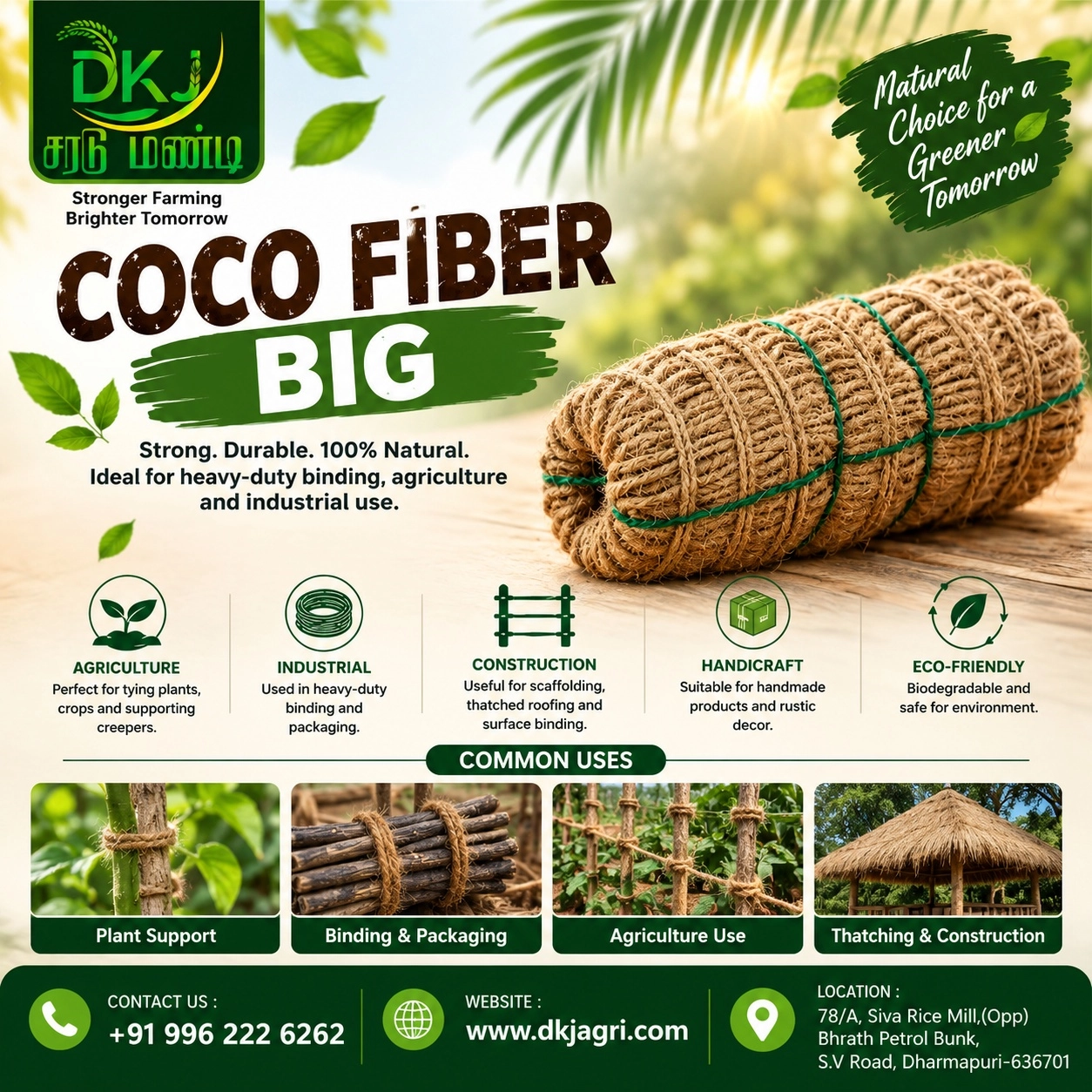
Big Piri has thicker fiber bundles for heavy-duty applications, while Small Piri has finer bundles for nursery and general farming use.
It is used for mulching, plant support, soil improvement, erosion control, and moisture retention.
Yes, it is widely used in farming, plantations, nurseries, and horticulture.
Yes, it helps retain moisture around plant roots.
Yes, it is a 100% natural and biodegradable product.
Yes, it reduces weed growth and conserves soil moisture.
Yes, it is commonly used in organic agriculture.
Yes, it is ideal for seedlings and young plants.
Yes, it provides good aeration and supports healthy root development.
Yes, it is suitable for home gardens and landscaping.
Yes, it is renewable and environmentally friendly.
Yes, it helps retain moisture and suppress weeds.
Yes, it is commonly used for vegetables and horticultural crops.
Yes, it helps stabilize soil on slopes and exposed areas.
Yes, it is widely used in greenhouse cultivation.
No, natural Coco Fiber can be used without chemical treatment.
Yes, depending on the application and condition.
Yes, it is easy to transport and install.
It is commonly used as a growing medium when processed into coco products.
Vegetables, fruits, flowers, coconut, banana, pepper, and nursery plants.
It decomposes slowly and provides long-lasting performance.
Yes, by improving water retention in the soil.
Properly processed Coco Fiber has good resistance and excellent aeration.
Store it in a dry place away from excessive moisture.
Yes, it is excellent for gardens, parks, and decorative planting.
Higher strength, better durability, and suitability for heavy-duty agricultural work.
Easy handling, flexible application, and ideal for nurseries and light agricultural use.
Agriculture, horticulture, landscaping, erosion control, and nursery production.
Premium Coco Fiber Big Piri and Small Piri are available from DKJ Saradu Mandi for agricultural and horticultural applications.
Hexa fencing net is durable, economical, easy to install, flexible, rust-resistant, lightweight, and suitable for multiple applications.
Jute ropes are available in different variants such as 1 ply, 2 ply, 3 ply, and 5 ply, depending on strength and application requirements.
General Product Questions
Jute is considered eco-friendly because it is biodegradable, recyclable, reusable, and made from natural plant fibers without harmful environmental impact.
PP rope is lightweight, strong, economical, waterproof, flexible, chemical-resistant, weather-resistant, and easy to handle.
General Questions
DKJ AGRI offers products such as Shade Net, Jute Rope, Coco Coir Rope, PP Rope, Hexa Fencing Net, Mosquito Net, Fiberglass Mesh, PET Wire, Color Sutli, White PET Wire, and agricultural utility materials.
Coco coir rope is available in various thicknesses, lengths, ply options, and custom sizes based on application requirements.
Customers can contact DKJ AGRI through the official website, phone, or direct enquiry channels for pricing, bulk orders, and product information.

Related Equipment

Coco Fiber Big

What Our Customers Say

Read verified customer feedback and ratings from our clients.

Contact US
🤖 AI Assistant Online: Ask about specifications, price, or get summaries | 📢 Share this page to WhatsApp/Telegram/X! 🤖 AI Assistant Online: Ask about specifications, price, or get summaries | 📢 Share this page to WhatsApp/Telegram/X!
Open
Engagement & AI
Page context loaded...
Hi! I'm your AI Assistant. Ask me anything about this page, specifications, pricing, or company contacts.
5.0
Verified on Yelp (200)