
TOMATO PLASTIC SPOOL – Agriculture Tomato Spool & Agriculture Toin
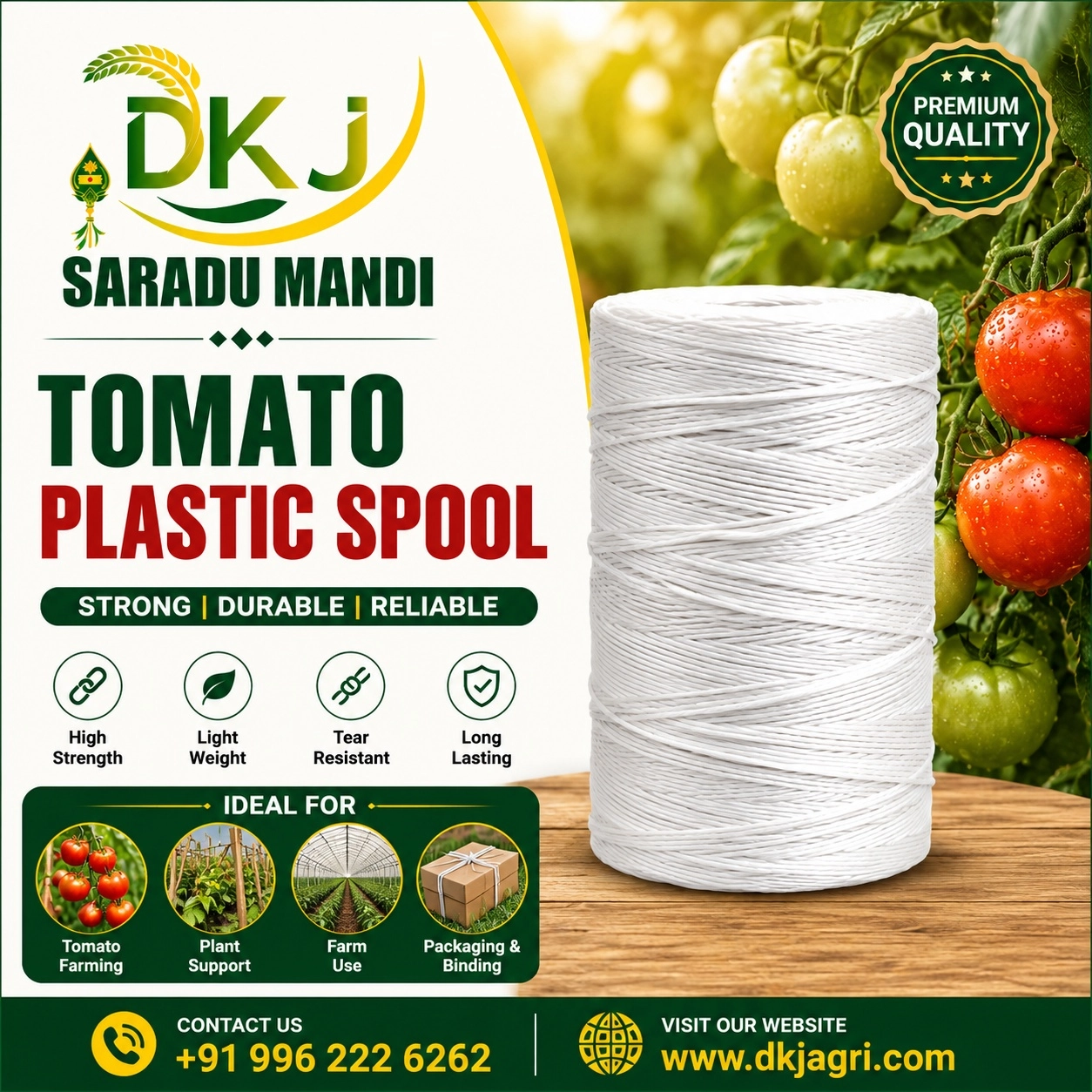
TOMATO PLASTIC SPOOL is an agricultural tying and plant-support product designed for farmers who need a practical method for managing tomato plants during different growth stages. In modern tomato cultivation, plants often require support to maintain an organized growing structure, especially when growers use staking, trellising or vertical support systems.
The agriculture tomato spool provides a convenient spool format for agricultural tying operations. Farmers can use suitable tying material from the spool to guide tomato stems and branches along support structures. This can help maintain plant arrangement and make farm operations such as pruning, harvesting and crop inspection more manageable.
The product is also commonly searched for using the local agricultural term agriculture toin. These local terms can help farmers and agricultural dealers identify the product according to regional usage and terminology.
Tomato plants can develop multiple branches and become difficult to manage without an appropriate support system. Depending on the cultivation method, farmers may use stakes, poles, trellis wires or other support structures. A suitable TOMATO PLASTIC SPOOL can be used as part of these systems to tie and guide plants.
The spool format allows farmers to dispense the required amount of tying material as needed. This can be useful when working across multiple rows of tomato plants. Instead of carrying loose tying material, the spool keeps the material organized and makes it easier to use during routine crop-management activities.
In open-field tomato cultivation, farmers can use the agriculture tomato spool with suitable support arrangements to guide plant stems. In protected cultivation, including greenhouse and polyhouse systems, tying and plant training are frequently incorporated into crop-management routines. The spool can be used where its material characteristics and tying method are appropriate.
The product is particularly relevant to commercial tomato cultivation because large farms may require tying support across numerous plants and rows. Organized plant training can make it easier for farm workers to access plants and perform routine activities.
The agriculture toin can also be useful for other suitable agricultural plant-support applications. However, suitability should be determined based on the crop, support system, tying requirement and environmental conditions.
Farmers should use an appropriate tying technique and avoid tying too tightly around growing stems. As plants increase in diameter, ties should allow sufficient room for natural plant growth. Regular inspection can help identify ties that need adjustment.
The TOMATO PLASTIC SPOOL is therefore a practical component for agricultural plant management, particularly where farmers use supported or trained tomato cultivation systems.
Where It Is Used
Tomato Farming :
The primary application of the TOMATO PLASTIC SPOOL is tomato cultivation. Farmers can use it for guiding and securing tomato stems to suitable support structures.
Trellising Systems :
The agriculture tomato spool can be incorporated into tomato trellising systems where plants are guided vertically or along support wires.
Staking Systems :
Farmers using stakes or poles can use suitable spool material to secure plants while they develop.
Greenhouse Cultivation :
In protected tomato cultivation, including greenhouse and polyhouse environments, suitable tying materials can be used as part of plant-training practices.
Nursery and Transplant Management :
Suitable agricultural tying applications may also be used during plant establishment and transplant-support operations where required.
Commercial Vegetable Farms :
Large-scale farms can use agricultural spools as part of systematic crop-support and plant-management operations.
Whom It Is Use
Tomato Farmers :
Tomato growers can use the TOMATO PLASTIC SPOOL for supporting and guiding plants during crop development.
Commercial Growers :
Large farms can use the agriculture tomato spool for organized plant-training operations across multiple crop rows.
Greenhouse Farmers :
Protected-cultivation growers can use suitable tying material with their existing trellis and plant-support systems.
Nursery Operators :
Nursery businesses can use suitable agricultural tying products for plant-support applications where required.
Agricultural Labour Teams :
Farm workers can use the spool during routine plant-training, tying and crop-management activities.
Agricultural Dealers :
Agricultural dealers can supply agriculture toin and related plant-support products to farmers and commercial cultivation operations.
Convenient Spool Format :
The spool format keeps the tying material organized and makes dispensing convenient during agricultural work.
Useful for Tomato Plant Support :
The product can be used as part of suitable tomato staking and trellising systems to guide plant growth.
Supports Plant Training :
The agriculture tomato spool can assist farmers in organizing stems and branches along suitable support structures.
Suitable for Commercial Farming :
It is practical for farms where many tomato plants require regular support and training.
Useful in Protected Cultivation :
The product can be incorporated into suitable greenhouse and polyhouse tomato-support systems.
Easier Farm Operations :
Organized plant growth can make crop inspection, harvesting and other routine farm activities more accessible.
Controlled Material Dispensing :
The spool format allows farmers to take the required amount of material during tying operations rather than handling an unorganized bundle.
Multiple Agricultural Applications :
Although primarily associated with tomatoes, the agriculture toin may be suitable for other crops requiring compatible tying or plant-support applications.
Practical Storage :
The spool can be stored in an organized manner when kept in a clean, dry location away from conditions that may damage the material.
Useful for Different Cultivation Methods :
The TOMATO PLASTIC SPOOL can be used in suitable open-field, trellised, staked and protected cultivation systems.
For best results, farmers should use an appropriate tying technique, avoid excessive tension around growing stems and regularly inspect plant ties as crops develop.